
Solstice, Wetiko and the Shamanic Antidote of the South
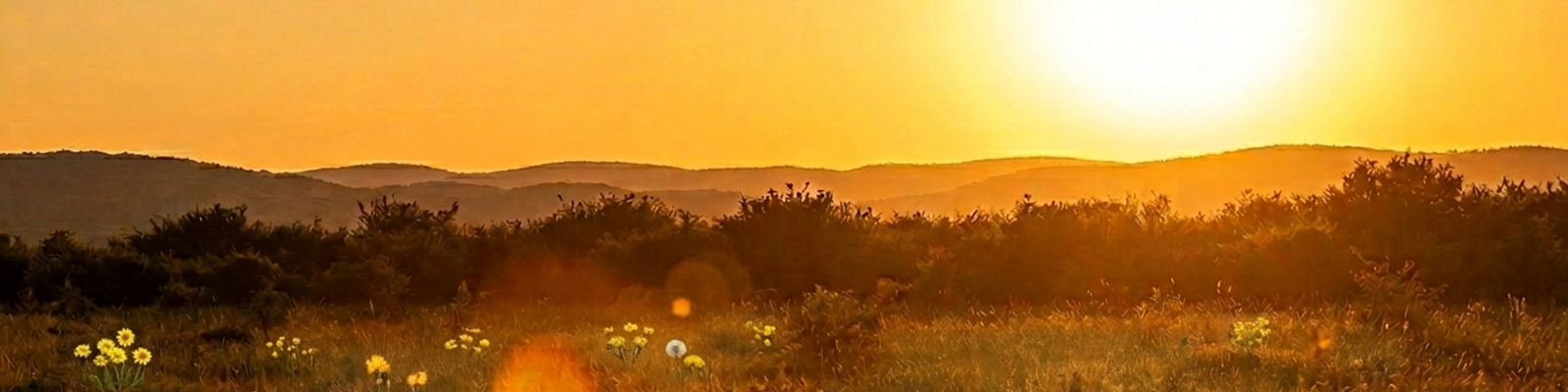
As we pass over the peak of the summer solstice, we are in the full embrace of the direction South on the great wheel of the year. In the Celtic tradition, the south carries many powers—joy, love, fullness, sensuality, feasting, music, and all that goes with the ebullience of life, the love of being here, on this planet, right now, in this body.
I've noticed that most people have trouble fully embracing the joyful powers of the South. There is always some credible inner voice that says it is inappropriate at this time to be joyful. I mean, just look at the world—how could you be joyful? How selfish and shallow is that? The voice always sounds reasonable because human life is always a disaster in one way or another. So, we decide to focus on “healing” and “manifesting” and “becoming wiser.” But not on joy, which is really underlying all other prayers.
The trouble is that joylessness becomes a contagious spiritual sickness, and our current cultural climate demonstrates this. A joyless person revels in gossip, conspiracy, and domination. Joyless people require constant, temporarily stimulating substitutes for joy. They feel overwhelmed by the seriousness of life—in fact, they are convinced that somberness equals spiritual or intellectual depth. They cannot believe that simple spiritual practices can be an antidote to joylessness. A joyless culture shops like crazy to feed its envy and competition, and convinces the populace that joy is wasteful, a Band-Aid, a sign of shallowness or privilege. Joyless people are obsessed with cleanliness, purity, and alikeness, and they have a high need for controlling others, which often tips over into violence.
Native American scholar Jack D. Forbes called this joylessness Wetiko. This is a Cree term (known as Windigo in Ojibwe) traditionally referring to a creature with an insatiable hunger that feeds on the life energy of others and eventually cannibalizes itself. Forbes frames it as a contagious virus. Those infected have an inner void that can never be filled, no matter how much wealth, status, advancement, or physical resources are devoured. Wetiko relies on deceit of others and itself, framing utter destruction and ugliness as beautiful progress, and greed as God’s blessing. Wetiko feeds on joylessness.
According to Forbes, in traditional Cree lore, those suffering from Wetiko were seen as having their hearts frozen. The medicine was drinking hot bear grease. Not only was it warming, and not only did it call in Bear as a helper; it also caused people to literally vomit out the “heart of ice” that was freezing their inside. I think it is possible that our culture as a whole is now vomiting out the old heart of ice. This, I pray, explains the deep upheaval of our times.
The summer solstice opens a portal of pure life power—divine medicine—that we can download as an antidote to the Wetiko virus and restore our joy.
When I was studying in the seminary, we would have chapel services on Tuesdays, and we'd do the Eucharist ceremony where people go up and take the cracker and wine. I’m not Christian in the sense that my fellow students were, but it's so beautiful, this idea that you are taking the actual body of God into your body, to merge. I could not understand how in the world people could be so somber about it. The room would fall silent, and only whispers were allowed. How could anyone not immediately begin dancing and singing as soon as the wine and cracker touched their wet, waiting tongue? I would stumble dizzily back to my seat, trying not to hum, grin, spin around, and shout "Wahoooooo!"
My fellow students were working from a different "model of God" than I was. Rather than “cosmic judge” or “vaguely disappointed father,” I carried in me the model of "God as Lover”—the one who loves life ecstatically in all of its expressions.
In these five days on either side of the summer solstice, here is your energetic prescription: First, for a few moments, ignore that inner voice that tells you "Now is no time to be joyful!"
Then, spend some time seeing and feeling the sensuousness of the life force all around you. The summer is one long wooing dance, a long seduction between the father sun and the mother earth. The sun strikes the earth each day, and the earth sighs with flowers and crops and birdsong and glistening sparkles on the skin of the lake; the water licks at the land, the bees dance, zithering among the yearning petals. As Rumi says, "Seawater begs the pearl to break its shell."
Third: Take a walk or stand in your garden and observe how the divine masculine and feminine woo one another. Observe—and feel—the wind on the leaves, the sun on the water, the rain on the garden, the dew in the sunrise, the way flowers are lapping up the nutrients from the wet soil. See the wooing and lovemaking everywhere. Drop your attention down to your heart center and see all of this from there.
And remember the great shamanic motto: what happens in nature happens in us. Let this sensuous unfolding happen in you. Let the sun and warm winds caress your earth too, and let your sighs burst forth. Call in that energy from the portal of the solstice, and make a clear statement: “Help me summon joy, in the midst of it all.”
What is the world like when God is the lover of everything? Are you seeking the radical new way? Are you one who says we need to dismantle the old normal and build a new normal? This is it.
I leave with you one of my little poems:
How I become hyacinth
How I become daffodil
How I become hosta
How I become sedum
easily divided easily rooted
How I become the two-tone
whistle chirp in that far off oak
How I become something you never planted
How I green from brown
How I heave up your mulch
and crawl to you in your winter slumber
How I spring from pruned branches
How I become again the weeds you thought you killed off
come back to deliver that message again
How I emerge from vines you thought were dead
How the longer you know me the bigger I grow
How you think you can cultivate me
How long it takes you to see
How I become you.
References
- Forbes, J. D. Columbus and Other Cannibals: The Wetiko Disease of Exploitation, Imperialism, and Terrorism. Seven Stories Press, 2008.
- McFague, Sallie. Models of God: Theology for an Ecological, Nuclear Age. Philadelphia: Fortress Press, 1987.